> For the complete documentation index, see [llms.txt](https://jackpauhl.gitbook.io/archive/llms.txt). Markdown versions of documentation pages are available by appending `.md` to page URLs; this page is available as [Markdown](https://jackpauhl.gitbook.io/archive/field-notes/application-techniques/articulation-matters.md).
# Articulation Matters
Spray Gun Positioning and Human Anatomy
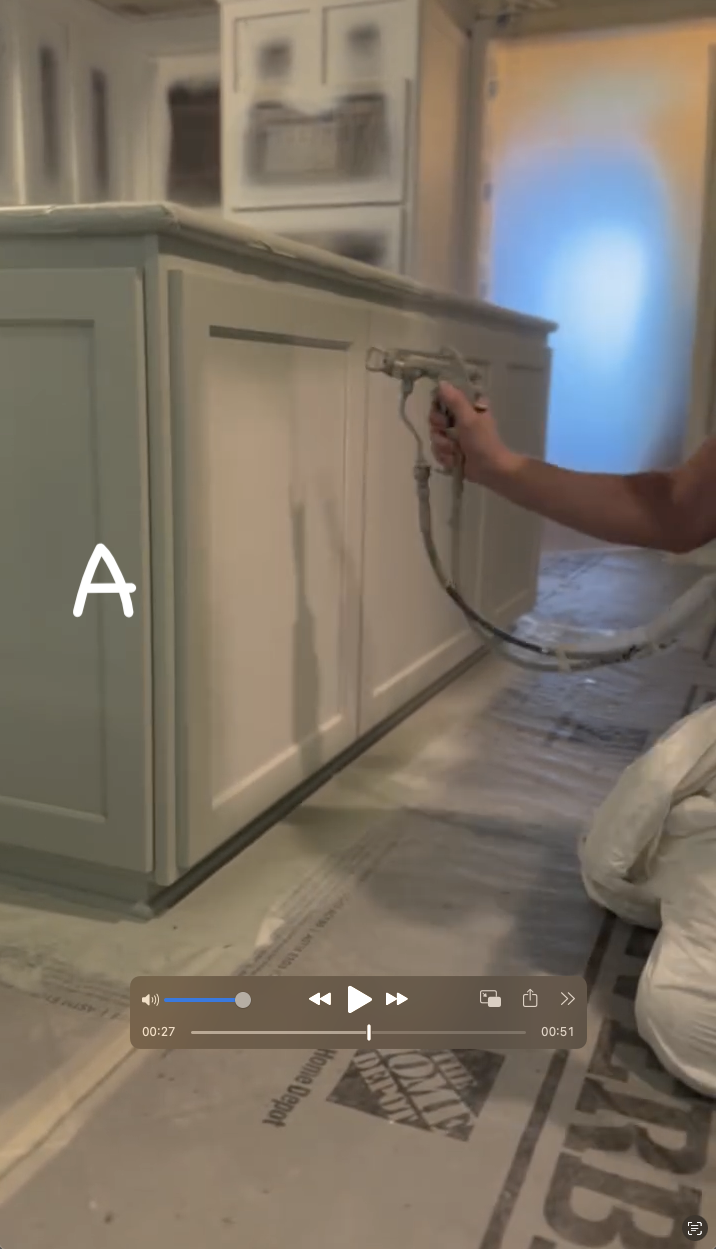
In Photo A, the finisher adjusts the spray gun vertically, which allows for proper articulation to hit the underside of the top edge of the cabinet door. That’s an intentional mechanical choice to counteract the physical limitation of wrist articulation when spraying a raised panel, especially in tight spaces like recessed doors or edges.
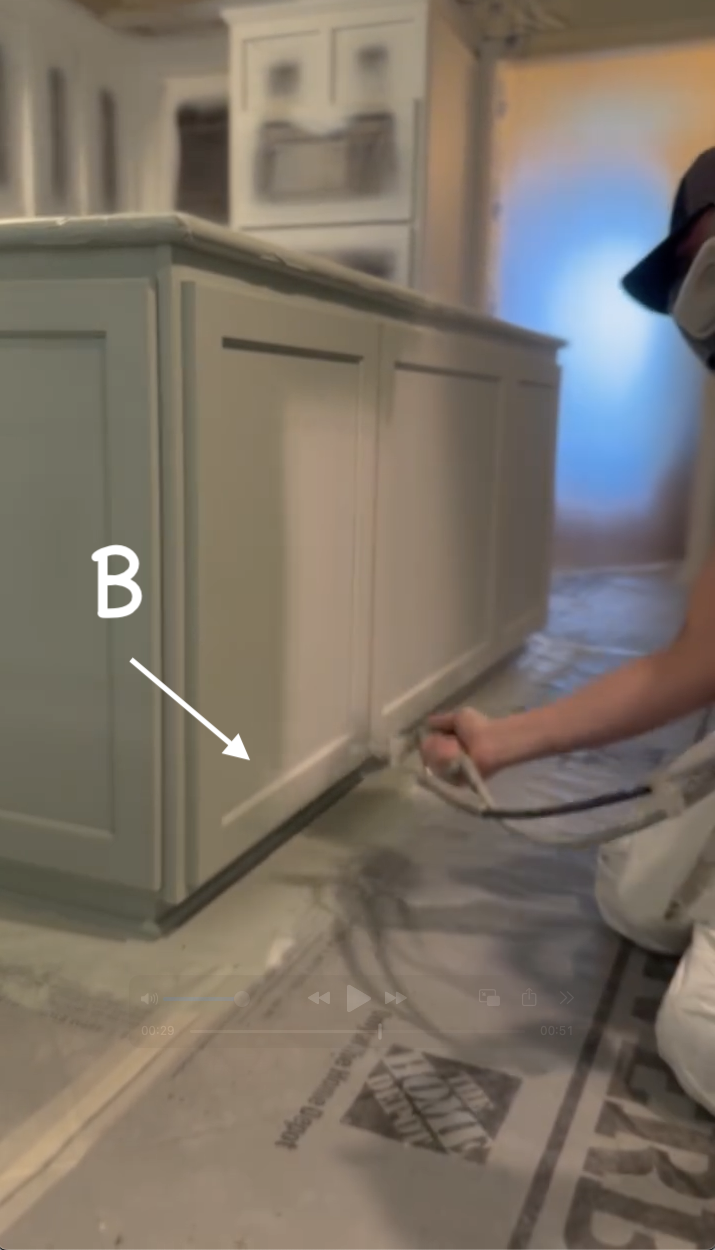
In Photo B, the gun is held horizontally, and because of how human anatomy works, that positioning limits downward wrist articulation. As a result, when approaching the bottom rail edge (where the arrow points), the spray pattern begins to overshoot it, leaving it light or even dry. He simply can’t tilt the gun enough while maintaining a natural grip and motion.
This isn’t about style or preference; it’s physics and biomechanics. You can’t override the geometry of the human hand or wrist.
The root issue most people miss is that gun positioning without compensating articulation results in coverage gaps. The positioning of the gun must account for human articulation limits, especially when dealing with recessed profiles or edges. Holding the gun horizontally during vertical passes limits articulation, making it easy to miss edges unless you deliberately reposition.
### A Note on Real-World Technique
To avoid confusion, in this scenario—kneeling—I would be holding the gun vertically with the hose pointing to the floor, as seen in photo A. The difference would be the positioning of the guard. I would position the guard opposite what you see in A. This finisher held the spray gun horizontal for most of this island, as seen in B. I never spray like that because of articulation limits.
The only thing that could make this scenario worse is putting an extension wand on it.
### A Word About Extension Wands
Spraying with a long extension wand might work for ceilings or soffits, but when you’re up close on detailed profiles like doors, you’re just trading precision for posture. You’ve essentially stripped yourself of every mechanical advantage you need for a clean finish. It’s like trying to sign your name with a broomstick.
Adding a 3-foot extension wand makes the articulation problem exponentially worse because you’re no longer just dealing with wrist limitations; you’re introducing leverage drag, where the distance between your hand and the spray tip makes fine adjustments nearly impossible.
You also lose control, since even slight wrist movements result in exaggerated swings at the tip.
On top of that, the longer the wand, the less tactile feedback you have from the surface, making it harder to sense how the coating is landing.
{% hint style="info" %}
This is how details get missed—not from inexperience, but from misunderstanding how anatomy and physics dictate tool performance.
{% endhint %}