# Drop Rolling

{% hint style="info" %}
This is a living document. It is maintained and updated without notice. It's best to refresh pages to ensure delivery of the latest iteration from the CDN Content Delivery Network in your area
{% endhint %}

Drop Rolling (v.): A finishing technique where the final roller pass on each section is performed in a downward motion—from ceiling to floor—to unify the nap direction and prevent bidirectional texture discrepancies.

This method differs from traditional back-rolling in that each pass moves from ceiling to floor in a single, consistent direction—unlike most techniques shown online, which alternate up and down. I introduced this method in the 1990s to eliminate bidirectional texture discrepancies, which often leave nap reversal artifacts visible in the dried finish as “striping.”

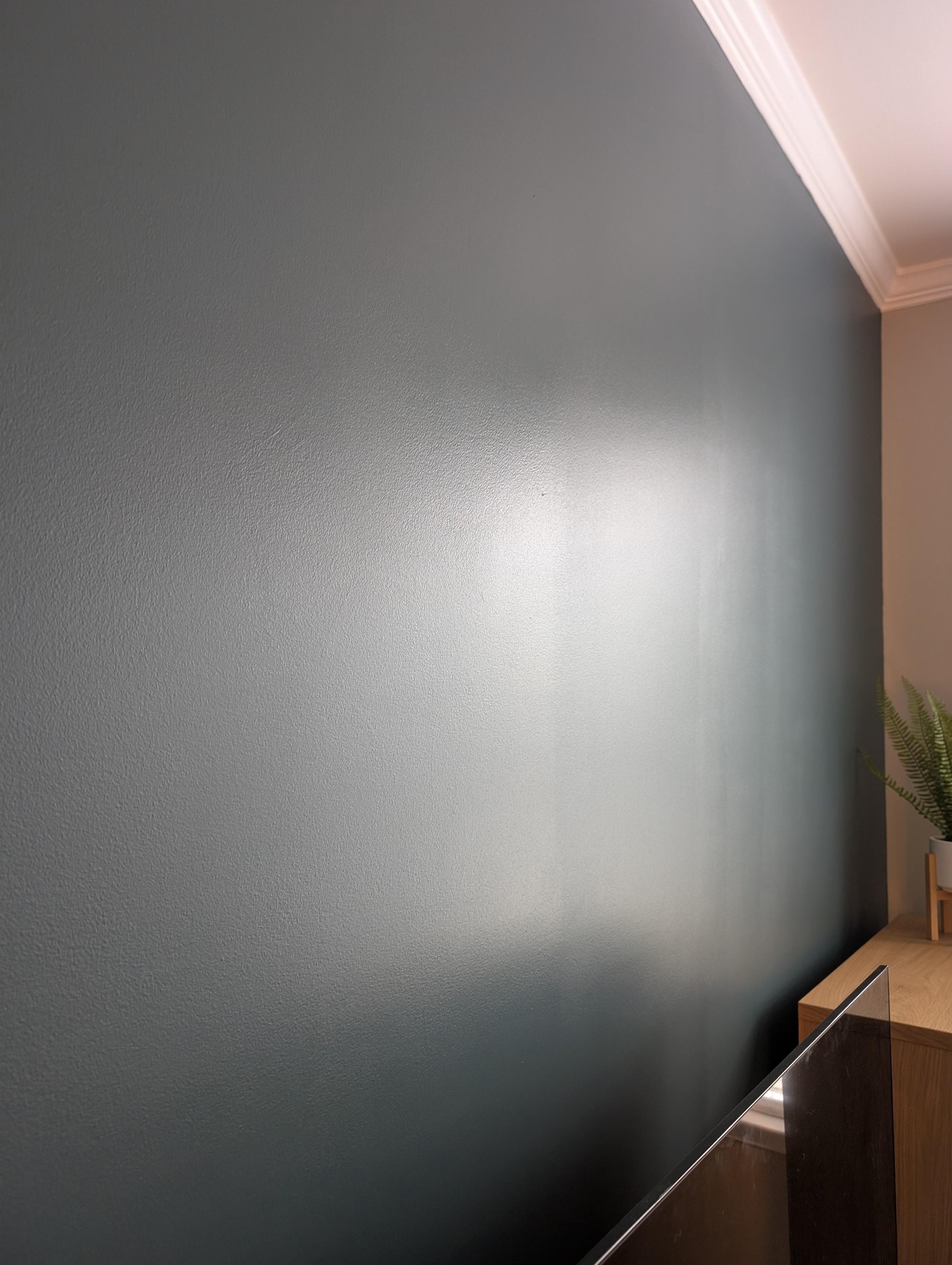
<figure><img src="https://474306782-files.gitbook.io/~/files/v0/b/gitbook-x-prod.appspot.com/o/spaces%2F3YVknxQjTY2AXSlwtWgR%2Fuploads%2FOqzrKUWTjuMxESL87RaU%2F592959419_122234058638129094_3961122841268653927_n.jpg?alt=media&#x26;token=ecd0cb0b-fb5c-4476-8e61-ca4e3a264133" alt=""><figcaption><p>This is what bidirectional texture looks like once it dries. You can see the faint vertical striping where the painter alternated up-strokes and down-strokes, leaving opposite nap patterns fighting each other in the light.</p></figcaption></figure>

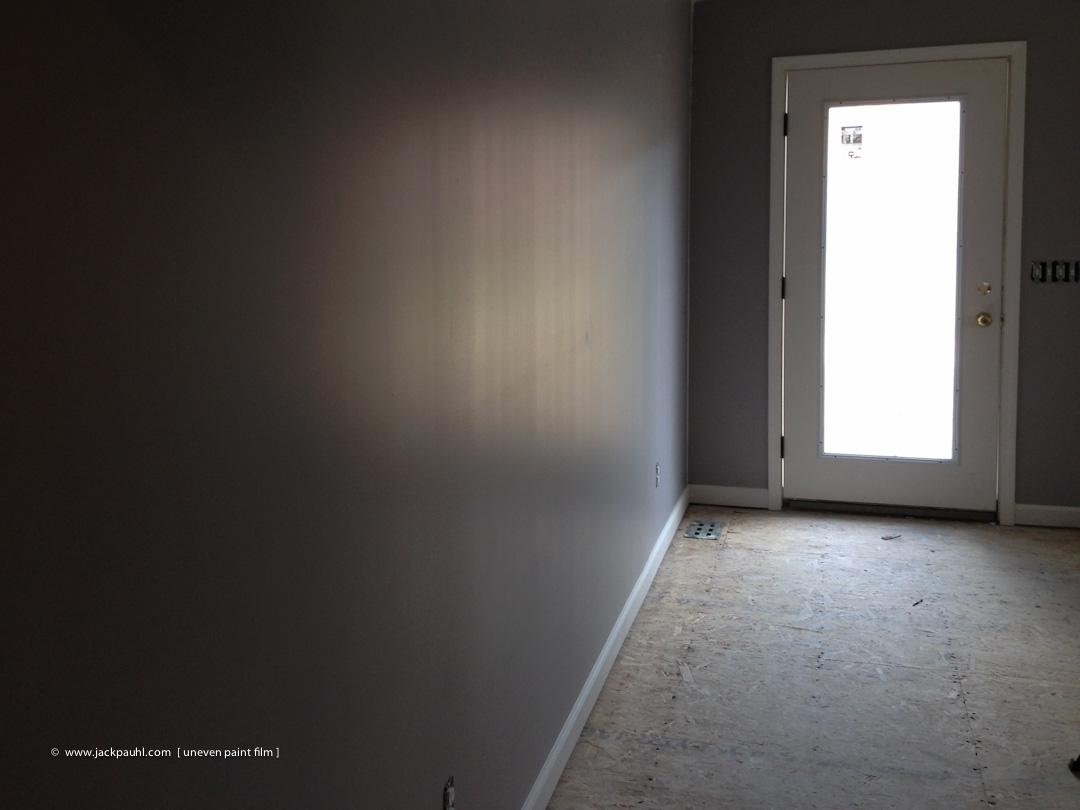
Painters have struggled with texture inconsistencies for decades without ever identifying their source. The problem was never the roller cover, keeping a wet edge, the paint quality, or the speed. It was the absence of a unified direction in the final pass. When you finish upward in one area and downward in another, you leave behind bidirectional texture (seen below). This faint but measurable micro-pattern shows up under raking light or after the job has cured.

<figure><img src="https://474306782-files.gitbook.io/~/files/v0/b/gitbook-x-prod.appspot.com/o/spaces%2F3YVknxQjTY2AXSlwtWgR%2Fuploads%2FLl5pds3eVsOusWMTe38U%2F20822365760_f11905545c_o.jpg?alt=media&#x26;token=07cf5cfe-0689-4d8f-9699-ece6a72e6312" alt=""><figcaption></figcaption></figure>

Drop Rolling removes the variable entirely.

One clean downward finish.

One direction of texture across the entire wall.

It gives you uniformity you can trust, teaches easily, and snaps the whole conversation about “rolling techniques” back to the only part that ever mattered: controlling the texture in the final pass.

***

{% hint style="warning" %}
If the last painter rolled the walls in a random mix of up-strokes and down-strokes, Drop Rolling won’t erase the damage. Those stripes are baked into the dried film. The only real fix is corrective surface work—either aggressive machine sanding or floating the wall with drywall mud to rebuild a uniform texture. Once bidirectional nap patterns cure, they’re permanent.
{% endhint %}